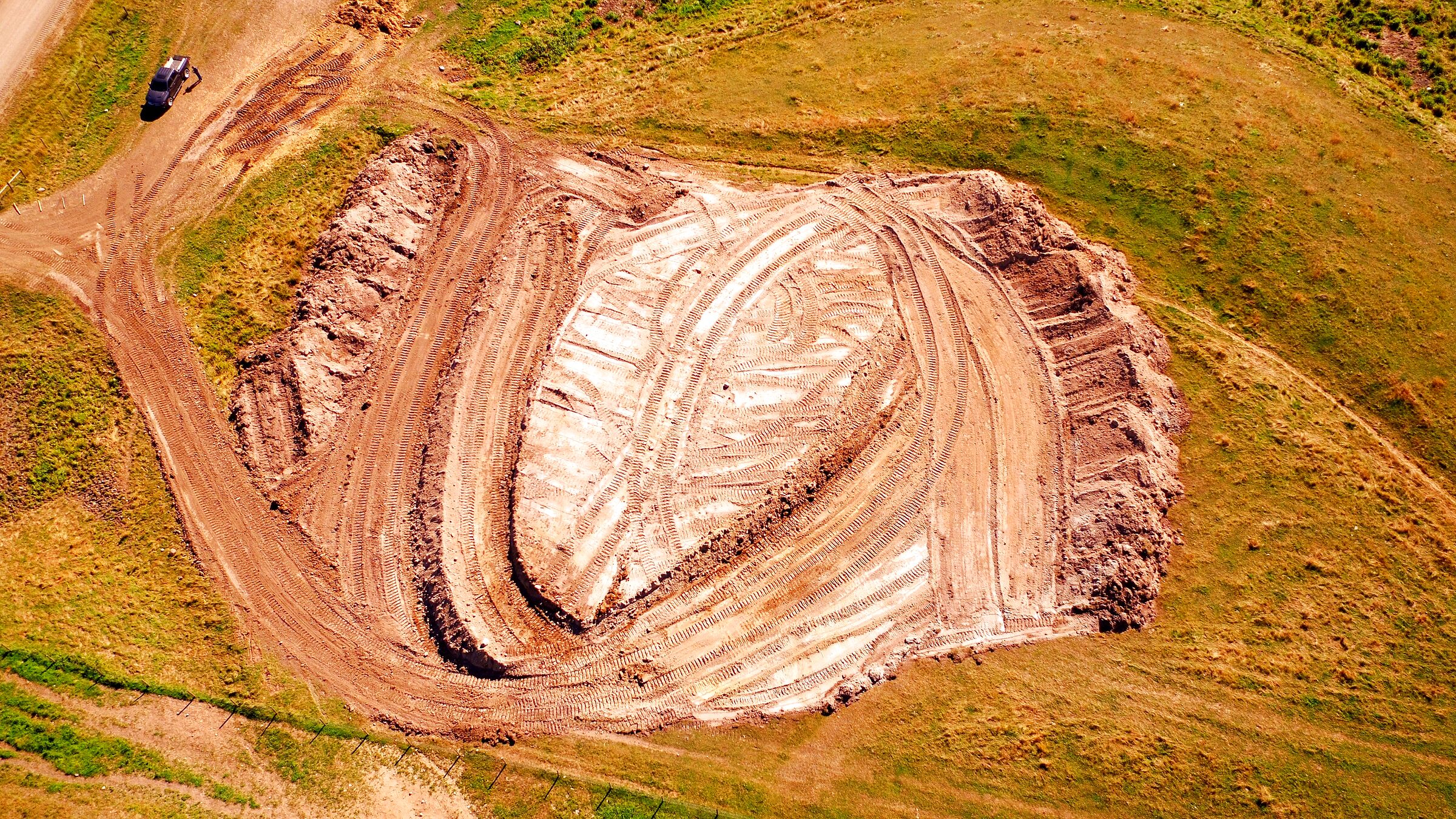
The proof end of the Forward Manufacturing Cell's pad from its 3D model: the FMC-D container and the utilities box under an open sky.
The floor

Own the Moulds.
Own the Schedule.


Counter-UAS is a manufacturing problem before it is an aerospace one. Canadian Shield cuts its own moulds on its own 5-axis machines, shoots its own airframes, and builds the fire control on the same floor. A new airframe is a tooling job measured in shop hours.

Made here

One Floor,
Door to Delivery.


The program runs from approximately 40,000 ft² of facility and remote Alberta land held within the group. The machines that cut the moulds and the presses that shoot the parts stand in the same building.

40,000 ft²
manufacturing facility on industrial lands
Class G
uncontrolled airspace over the group's remote Alberta land
5-axis
CNC machining centre heading a full machine shop
30 years
of directional-drilling engineering behind the shop
MACHINE SHOP

A full shop, not a mould cell

A full machine shop with a full manufacturing history behind it, headed by a 5-axis CNC machining centre. It once cut downhole drilling tooling. It now cuts the division's own injection moulds, and machines the fittings and gauges beside them.

PET LINE

Recycling and injection, in house

A PET recycling and injection line runs on the same floor. Alberta's recycled plastic goes into the fleet's non-structural mouldings without leaving the building.

THE SITE

Industrial lands, already secured

The facility sits on industrial lands and was formerly a licensed cannabis production site. It inherits that building's perimeter security, access control and monitoring rather than starting from an empty shell.

The shop is older than the division. Thirty years of horizontal-directional-drilling engineering paid for it, and Company carries that history in full.

What it left on this floor is the 5-axis cell that once cut drilling tooling and now cuts injection moulds, the tracked-chassis discipline behind the ground platform, and an engineering drawing estate decades deep. None of it was drawn for defence, and all of it transfers.

What comes off the floor is one fleet in four domains, set out on the Fleet: Air, Ground, Water and Underground, on one chassis philosophy. The rule every one of them is built to is on Doctrine. No radio and no GPS aboard the fleet, with the one ruled exception: the two mine clearance configurations, KAOS-MC Land and KMM-01, carry GNSS and command links, and KMM-01 also carries a marine radar and AIS to see traffic and be seen.

The mould shop

A New Airframe Is a Tooling Job.
The Tooling Is Cut Here.


For most hardware programs, injection moulding begins with a wall: an outsourced tool, a supplier's queue, and roughly eight weeks before the first shot. The division owns the machines and the machinists, so the wall becomes internal schedule.

EIGHT WEEKS, OUTSOURCED

The industry's wall

The industry-typical mould lead time sits between a design and its first part: an external queue on someone else's schedule, paid for at someone else's margin, setting the pace of every iteration behind it.

CUT IN HOUSE

Cavity, core and inserts

The owned 5-axis cell machines cavity, core and inserts in house. Tool cost collapses to machine time and steel. Lead time collapses to the shop's own schedule.

MACHINING SPEED

Re-cut the insert, shoot parts

A fin change, a wall-thickness fix, a new payload bay: re-cut the insert and shoot parts. The design loop runs at the speed of the machines rather than the speed of a supplier qualification cycle.

The shop floor
Eight-week mould lead times become shop hours.

The wall other programs queue behind is this shop's own schedule.

Standing up a whole new platform is a new mould family on machines the group already owns, not a new supplier qualification cycle and not a new factory. The Air, Ground, Water and Underground families have one thing in common on this floor: a moulded airframe, a set of inserts, and a shop that can re-cut them.

The CS-110 round the CDNS UAV Platforms is built around is a moulded article first. Every platform behind it inherits the same economics, because every one of them is shot on tooling cut in the same bay.

Materials

Structure in Nylon.
Everything Else in PET.


The materials canon draws one line and holds it: recycled PET where it is right, engineered resin where structure depends on it.

Part classMaterialThe rule
Structural parts, fleet-wideMoulded glass-filled nylonEvery structural part is moulded glass-filled nylon. The canon applies fleet-wide.
Housings, covers and the cheapest moulded bodiesRecycled Alberta PETRecycled PET is strictly non-structural.
Moulds, cores and insertsTool steel, cut in houseWear items by design, re-cut on the same 5-axis machines that made them.

A post-consumer feedstock does not carry a structural pedigree, so it is excluded from structural parts by policy rather than by footnote.

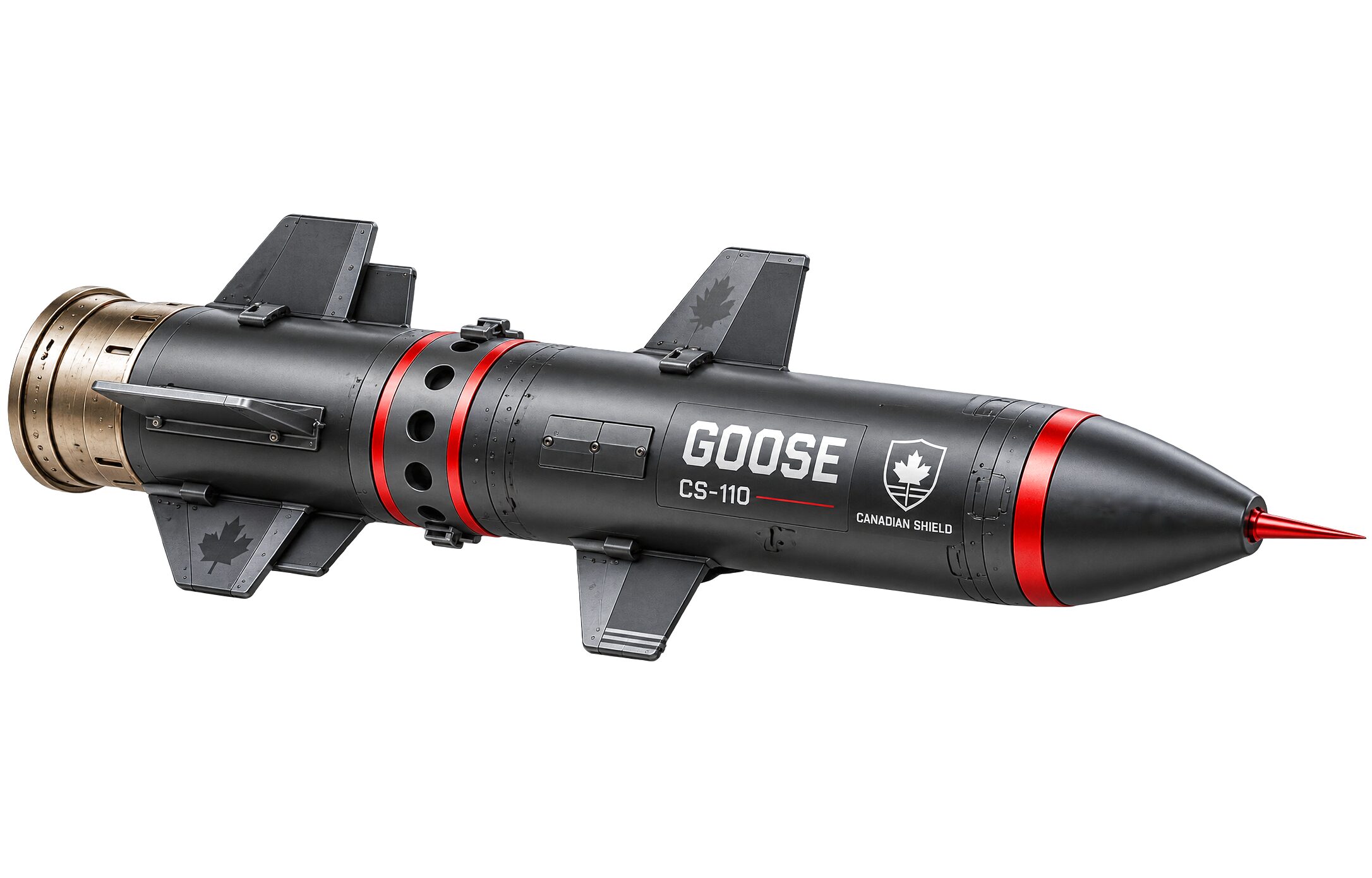
The Goose CS-110 round against a plain ground: the obturator ring at the base, the moulded body, the bonded fin set and the nose.

Recycled content is real and deliberate, and it never flies under load. Where the part carries structure, the resin is engineered for it. Where it does not, the fleet carries Alberta's recycled plastic: housings, covers and the cheapest moulded bodies in the fleet.

Every part meets the rule on its own account, whatever program it belongs to, and the rule travels. When the Forward Manufacturing Cell goes abroad, the same discipline goes with it as process doctrine: qualified resin where structure depends on it, local recycled PET where it is right.

Quality

The Quality System Came With the Shop.
It Was Never Bolted On the End.


The machine shop carries a full manufacturing history and ABSA and CSA quality-control certification. Final assembly and inspection happen on the same floor, gated on the stages before them.

Quality control here is not a department bolted to the end of the line. The shop that cuts the moulds also machines the fittings, the launcher hardware, the jigs and the gauges the line is inspected with, so the measuring hardware and the production hardware are machined in the same bay.

Final assembly and quality inspection sit on the same floor as the end of the line, gated on every stage before them.

From drawing to article

Six Stages, One Building.
CAD at One End, a Round at the Other.


The production flow from CAD to a finished round, stage by stage, on capability owned inside the group.

Step 1

Design

Airframe, mould and fixture design run in one loop, designed for the tools the shop cuts itself rather than for a tool someone else will quote.

Step 2

Cut the tool

5-axis CNC machines cavity, core and inserts in house. The tooling wall becomes shop hours, and a revision becomes a re-cut insert.

Step 3

Mould

Moulding presses and a process engineer are in house. Owned capability on the group's own floor, on tooling that came off the machine one bay over.

Step 4

Machine fittings

Metal fittings, launcher hardware, jigs and gauges are machined in the same bay as the moulds.

Step 5

Fire control and flight stack

Detect, track and cue are owned capability, built in house on the same floor. The judgment of the system never leaves the group.

Step 6

Assemble and QA

Final assembly and quality inspection on our own floor, the designed end of the line, gated on the stages before it.

Two ends of that chain decide whether the rest of it is worth anything. The design loop starts it, and it runs at machining speed because the tool it draws for is cut in the next bay. The inspection closes it on our own floor, gated on every stage before it.

Every stage on the rail is capability owned inside the group. A partner reading this chain is reading what the division does itself, not a set of relationships it manages.

One interface

A Payload Meets One Standard.
Not One Platform at a Time.


The platform family shares a single electrical and mechanical seam, and the wiring that carries it is built in house rather than bought in.

HARNESSES

Built on the group's own floor

Wired Industries builds the UAV wiring harnesses. The physical build side of the common interface standard stays inside the group.

ONE STANDARD

Wiring and mounting, fleet-wide

A common wiring and mounting interface standard runs across the platform family, adapted from established MIL-STD practice, so payloads and subsystems move between platforms instead of being re-engineered for each one.

INTEGRATION

Adaptation as a standing capability

Adaptation and integration engineering is a standing capability of the division. Partner payloads and sensors are brought onto the fleet against the common standard, on the division's side of the seam.

A common seam is a manufacturing decision before it is an engineering one. It stops a mould family from turning into a bespoke program every time a payload changes, and it lets one harness build serve several platforms. It also decides where a partner meets the fleet: an integrator brings a payload to the standard, and the adaptation work happens on the division's side of it, against drawings and fixtures the shop already holds.

The integration and licensing route into that seam is set out at Primes & OEMs, and the guidance and control architecture behind it is on Technology. External systems talk to a mission gateway, and the gateway translates only permitted request types into the approved local task vocabulary. No external network ever holds actuator authority.

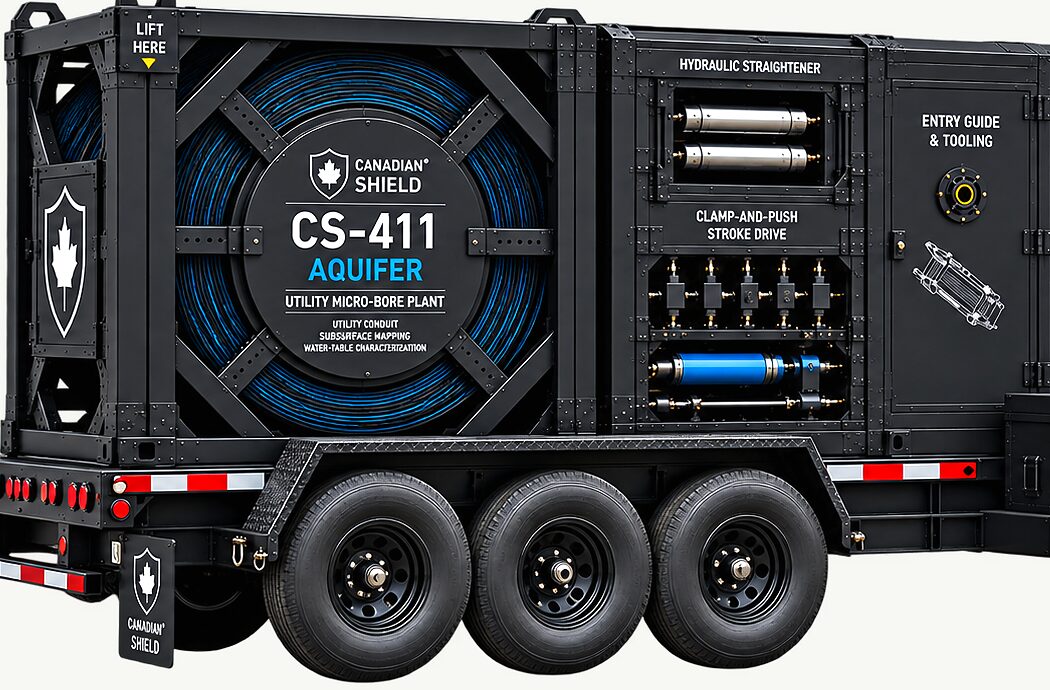
The Aquifer CS-411 plant on its trailer: the fibre reel closed by its shield-marked cover, the hydraulic straightener and the clamp-and-push stroke drive along the deck.
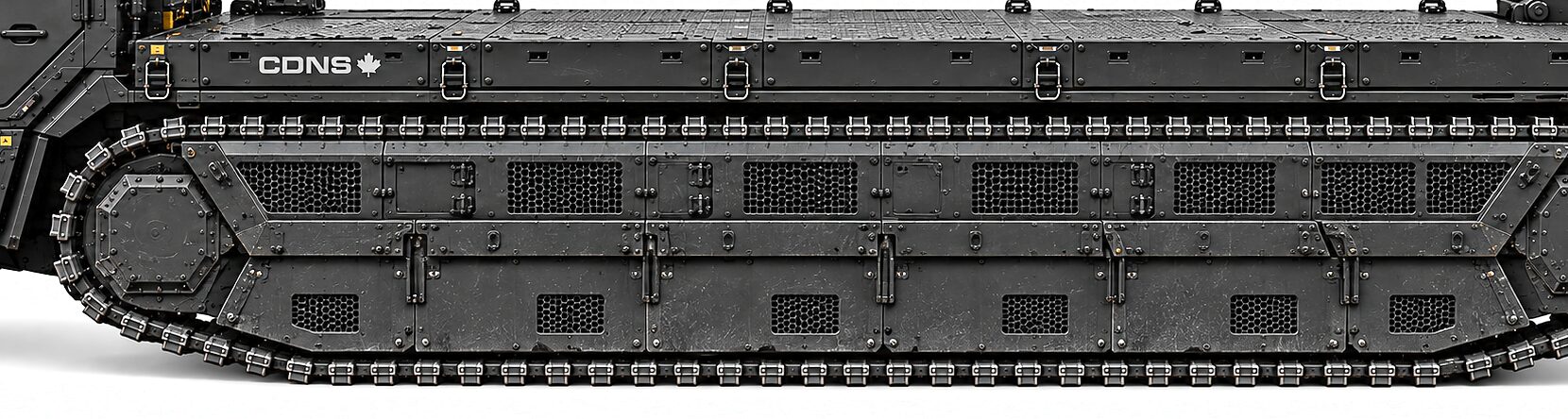
The side of a CDNS KAOS welded tub above one running-gear cartridge, the skirt panels and the track running the length of the frame.
Depth

Depth Is Made,
Not Bought.


Trading multi-million-dollar interceptors against cheap drones loses the cost exchange every time it runs. The answer is industrial: unit cost and magazine depth, which is to say tooling, moulding and throughput.

Salvo depth beats single-shot perfection, and salvo depth is a manufacturing property. Depth of magazine is what a shop floor buys, and it is bought in tool steel and press time rather than in a contract for someone else's stock. Canada has the pieces and no volume base: the missing factory is the market.

The floor space, the quality system and the workforce are already in place. Carried outward, the same argument is the Forward Manufacturing Cell: depth made on an ally's own floor.

Turnaround, not flight time, caps the day. The same throughput logic that runs the factory runs the fleet. For a working machine, daily output is set by utilization, and utilization is dominated by how fast the machine turns around.

One pack standard across the fleet. A common battery-pack standard runs across the battery-powered platforms, so a spent pack swaps for a full one inside the turnaround window, and packs, chargers and spares are one inventory across the fleet. Outside the two ruled mine clearance configurations, the battery-powered platforms run with no radio and no GPS: nothing on them transmits by radio, and nothing guides on a link.

Persistence in the air works the same way: a watch is held by cheap airframes rotated through it.

Supply

Four Places a Part Comes From.
Each One Is Written Down.


Sovereignty here means controllable design, software, configuration, manufacturing, service and supply-chain choices. It is a manufacturing story, not a flag on a brochure.

IN HOUSE

Made on the group's own floor

Moulds, mouldings, machined fittings, jigs and gauges, harnesses, fire control, final assembly and inspection. Named assemblies are built, integrated and tested in Canada.

CANADIAN

Alberta's own base

An Alberta industrial workforce and supplier network, and a recycled PET feedstock collected in the province the shop sits in.

ALLIED

Repair and re-image with partners

Depot repair and secure re-image capability sits in Canada and selected allies. Qualified local assembly or manufacture with an allied production partner is part of the commercial architecture where it is strategically appropriate.

GLOBAL COMMERCIAL

Bought, and tracked as bought

Compute, sensors and some actuators are sourced from allied and global commercial suppliers and registered by criticality, with substitutes. An approved component list carries origin, lifecycle, lead time, export sensitivity, single-source risk and substitutes for each part.

A maintained register of critical dependencies carries a substitution plan against each one, and systems are repaired, calibrated and recovered domestically.

What a supplier has to bring to sit on that register is the subject of the supplier door. The wider control argument, across design, software, data, service and configuration, is on Sovereignty. The route in for every reader, and what each tier of access opens, is Procurement.

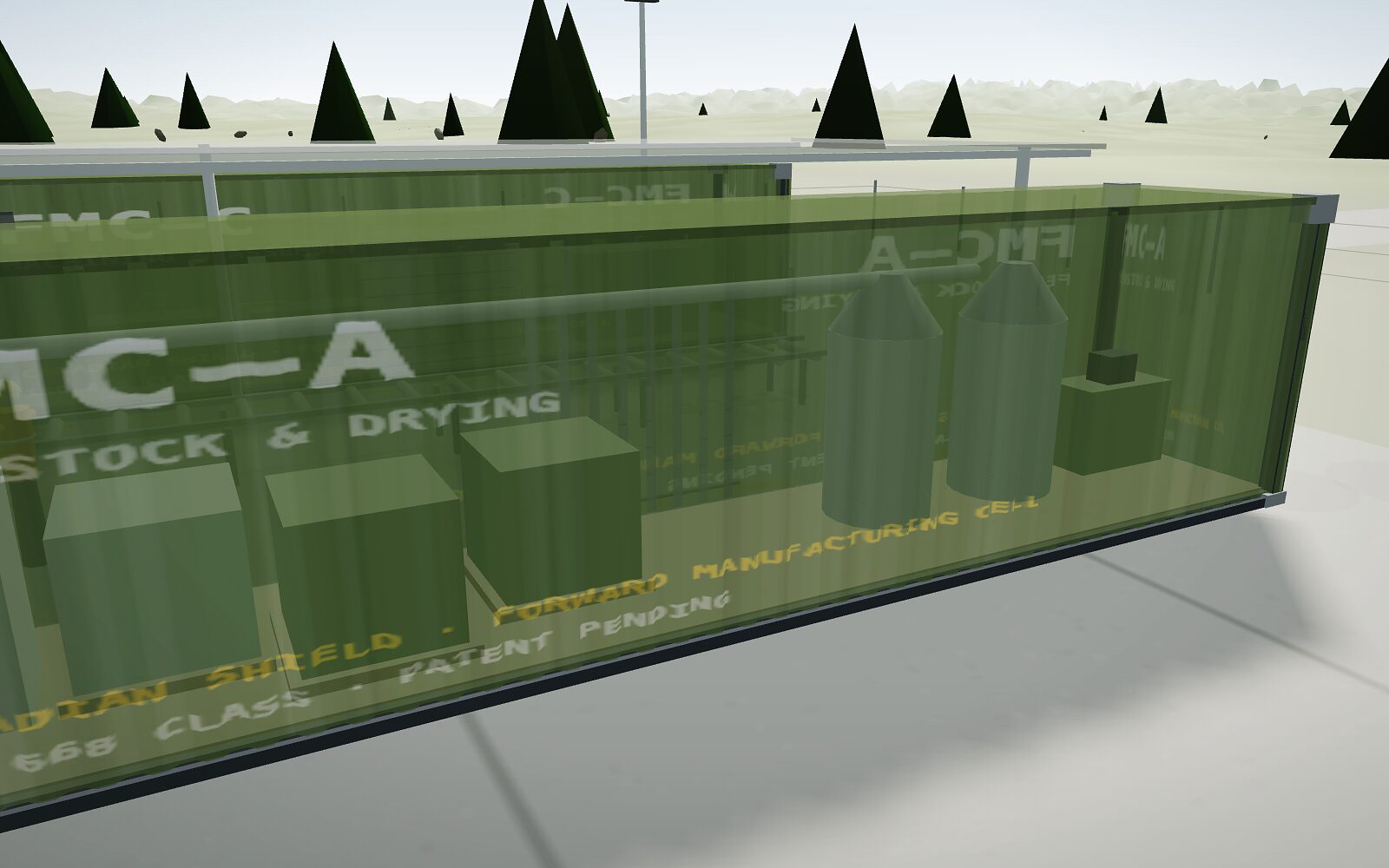
FMC-A with its walls dropped in the 3D model: the feedstock hoppers and dryers inside the feedstock and drying container.
The Forward Manufacturing Cell

The Same Floor,
Stood Up Somewhere Else.


Every section above this one argues for owning the line. The Forward Manufacturing Cell aims that argument outward: a modular, containerized slice of the manufacturing stack, commissioned on an ally's own floor.

Instead of exporting finished CS-110 carrier rounds, the cell exports the part of the production stack that makes them: an allied nation moulds and assembles its own rounds in-country, from local feedstock including recycled PET, on dies cut in Alberta.

A shipped round crosses the ocean once and is expended. A shipped factory crosses once and every round after it is born local: polymer body, fins and nose mass moulded on the buyer's own floor. What was a shipping queue becomes a production schedule the host controls.

Step 1

Feedstock

The cell eats what the host nation already has: qualified resin pellets, or local recycled PET washed and compounded by host industry, then dried on the intake line. A stockpile can be embargoed or delayed. A feedstock stream collected at home cannot.

Step 2

Mould

Injection and blow moulding shoot the body and fin shells on Canadian-Shield-cut dies. The buyer runs the press; Canada keeps the tooling art. Press forward, die shop home, and that split is permanent.

Step 3

Assemble

Body, fins and the inert kinetic nose mass come together on our fixtures and feed augers. Skill lives in the tooling rather than in the operator: fixtures locate, augers meter, torque is set by the jig.

Step 4

Prove

Dimensional QA, mass-and-balance, then an indoor proof lane driven by the same compressed shop air that launches the round in service. A round that passes gauge, balance and lane gets its serial. One that fails goes back to the regrind bin.

Step 5

Account

Each proven round is serialized against the cell's production ledger, which also schedules calibration, consumables and die rotation. One book serves both flags: sovereignty made auditable for the buyer, the licence made enforceable for Canada.

The recurring economics stay in Alberta. Dies wear with use, and every replacement is re-cut on the same 5-axis machines that collapse the eight-week tooling wall to shop hours. The cell is capital, commissioned once. Replacement tooling, consumables, a per-round production licence and the service line follow. Razor and blades, in tool steel.

WHAT SHIPS

The low-tech, non-explosive end of the line

  • Moulded polymer airframe — body shells, fins and the inert kinetic nose mass.
  • Pneumatic launcher, driven by compressed shop air. No propellant, no primer, no pyrotechnic charge.
  • The process — dies cut in Canada and rotated home for re-cut, fixtures, augers, gauges, the proof lane, the ledger.
  • Commissioning — the stations stood up and proved on the buyer's floor as one capital program.
WHAT NEVER LEAVES CANADA

The judgment of the system

  • Fire control — detect, track, classify and cue. In every case, without exception.
  • Seekers and guidance electronics. No seeker, no guidance stack, no flight computer transfers.
  • Anything with a warhead or fuze, which the round does not have, anywhere, in any variant.
  • Energetic material of any kind. None exists at any point in the process.

The fence is what makes the cell exportable. What crosses is the means to mould a simple thing in volume; what stays is everything that decides where it goes. The cell is an engineered, patent-pending system, and it is controlled technology: international transfer requires Canadian government permits, and export posture is counsel-first.

What an allied industrial-participation lead gets on their own floor, station by station, is set out at the cell's industrial-participation section.

CDNS Autonomy

The Other Half Is Not Moulded.
It Is Surveyed, Fitted and Recorded.


Half of this enterprise is not a moulded round at all. CDNS Autonomy converts machines a customer already owns, and every conversion is a manufactured article: a survey, a kit, a calibration and a record.

What a conversion manufactures is the conversion: a control-geometry survey of the cab, a machine-specific mount and actuator kit cut to that geometry, a calibration, and a signed configuration record. Defender CS-820 takes the seat for earthworks, berms and revetments, obstacle reduction, route and rubble clearance, remote handling and driving, on the ground and the machines defence engineering already runs, military-pattern vehicles included — each surveyed, fitted, calibrated and recorded like any other machine. Human safety comes first, on every line. It never operates a weapon and never fires anything.

That line has a property of its own, and everything about it is there: CDNS Autonomy carries the seat and the dock, safety, autonomy, operations, the machine families a kit is surveyed against, and the two profiles that run on the same hardware, Responder CS-810 and Defender.

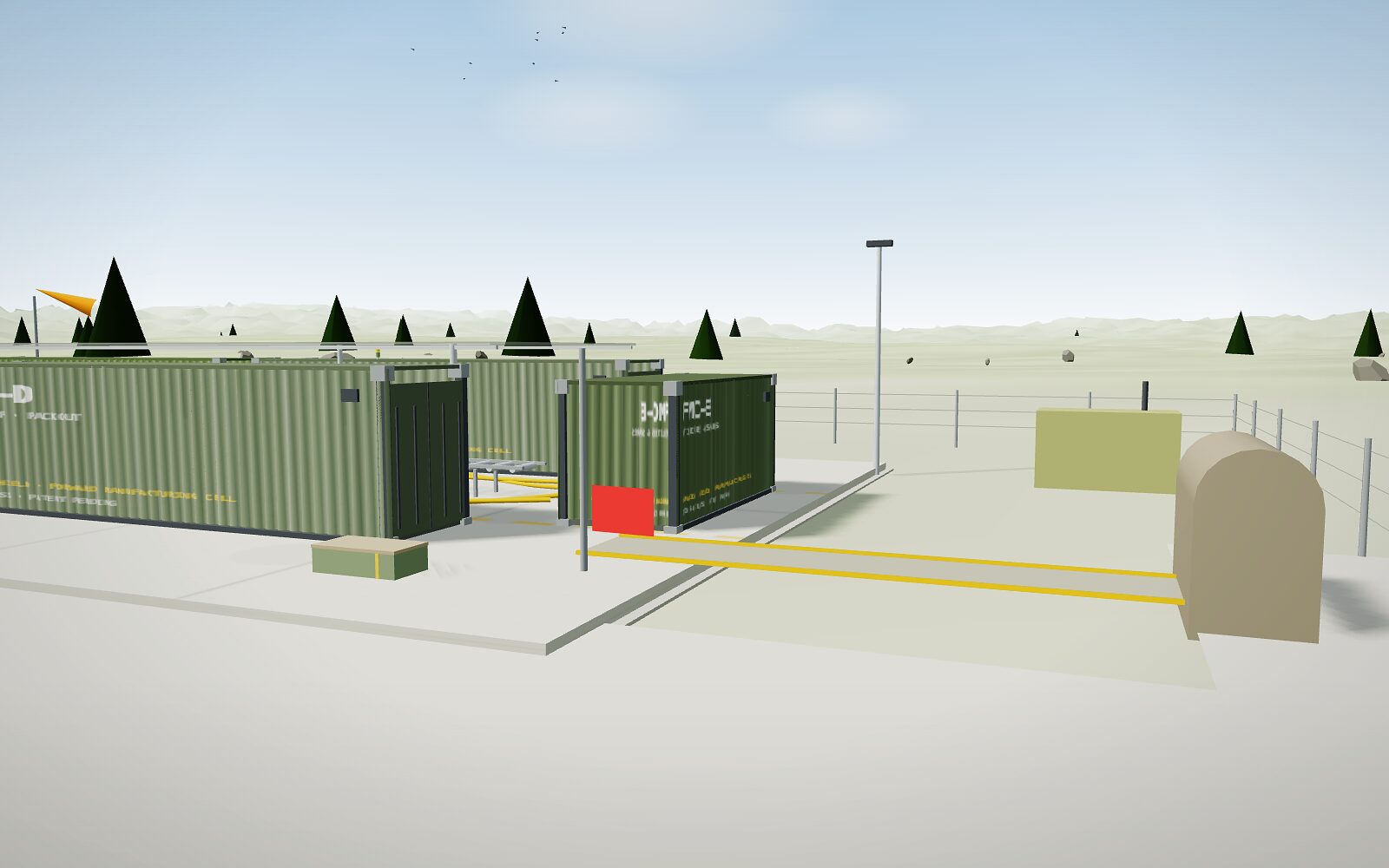
A borrow pit seen from the air: the cut face, the haul tracks curving through the open ground, and a pickup parked at the edge of the grass.
The ground

The Ground Is the Group's.
So Is the Sky Over It.


The program holds remote Alberta land within the group. The site sits under Class G airspace, a classification that comes with the geography.

Ground the air programs need. The site holds launch, recovery and flight-trial ground, within sight of the floor where the parts were moulded. It is infrastructure held inside the group rather than range time booked from someone else.

Airspace that came with the land. Class G uncontrolled airspace sits overhead. The classification comes with the geography, not with a permission granted to the program.

A shop floor and the ground for a trial on one holding put the two ends of that loop within sight of each other: cut the insert, shoot the part, and carry it out to the line without leaving the holding.

Ground and airspace are stated here as what the holding carries: the same kind of asset as the building and the machines in it, owned rather than rented.

Fit

A Claim a Buyer Can Walk.
It Stops Where the Floor Does.


A manufacturing claim is the one a buyer can walk through. What is made here, what is bought in, and what this floor does not do are set out side by side.

WHO IT IS FOR

Readers this page answers

  • A procurement officer weighing sovereign supply, who needs to know what is made here, what is bought, and what can be substituted.
  • A prime's manufacturing lead, assessing whether a partner can hold rate, hold tolerance and hold a configuration.
  • An allied nation planning industrial capacity or magazine depth, and weighing a production cell against a shipping queue.
  • A supplier weighing a place on the approved component list, who needs to know what the shop makes for itself, what it buys, and what a part has to carry to sit on the register.
WHAT IT IS NOT

Where the floor stops

  • No warhead, no fuze, no energetic material, at any point in the process, in any variant. Carriers, not munitions.
  • Nothing of the system's judgment is exported. Fire control, seekers and guidance electronics stay in Canada in every configuration, for every customer.
  • Machine-specific, every time. Every conversion is surveyed, fitted, calibrated and recorded against one configuration, and it is sold as a configuration.
  • Nothing here is an offer. No price appears on this site, and nothing on it is a commitment or a representation to any government body.
The conversation

Bring the Volume You Have to Hold.
The Answer Starts at the Mould.


If you buy, build, integrate or regulate uncrewed systems, the conversation worth having is about the factory, and it starts on the shop floor where the 5-axis machines already run.

Enquiries are screened before any discussion, export posture is counsel-first, and permits are issued per shipment. What is most useful early is the requirement itself, while it can still shape a mould family.

Suppliers who want a place on the approved component list start at the supplier door. Allied buyers weighing in-country production start at the Forward Manufacturing Cell. A ministry or a prime bringing a domain and a mission to the floor starts with a screened enquiry.